
ZETA: A New Look at Weighted Training T-Shirt Research
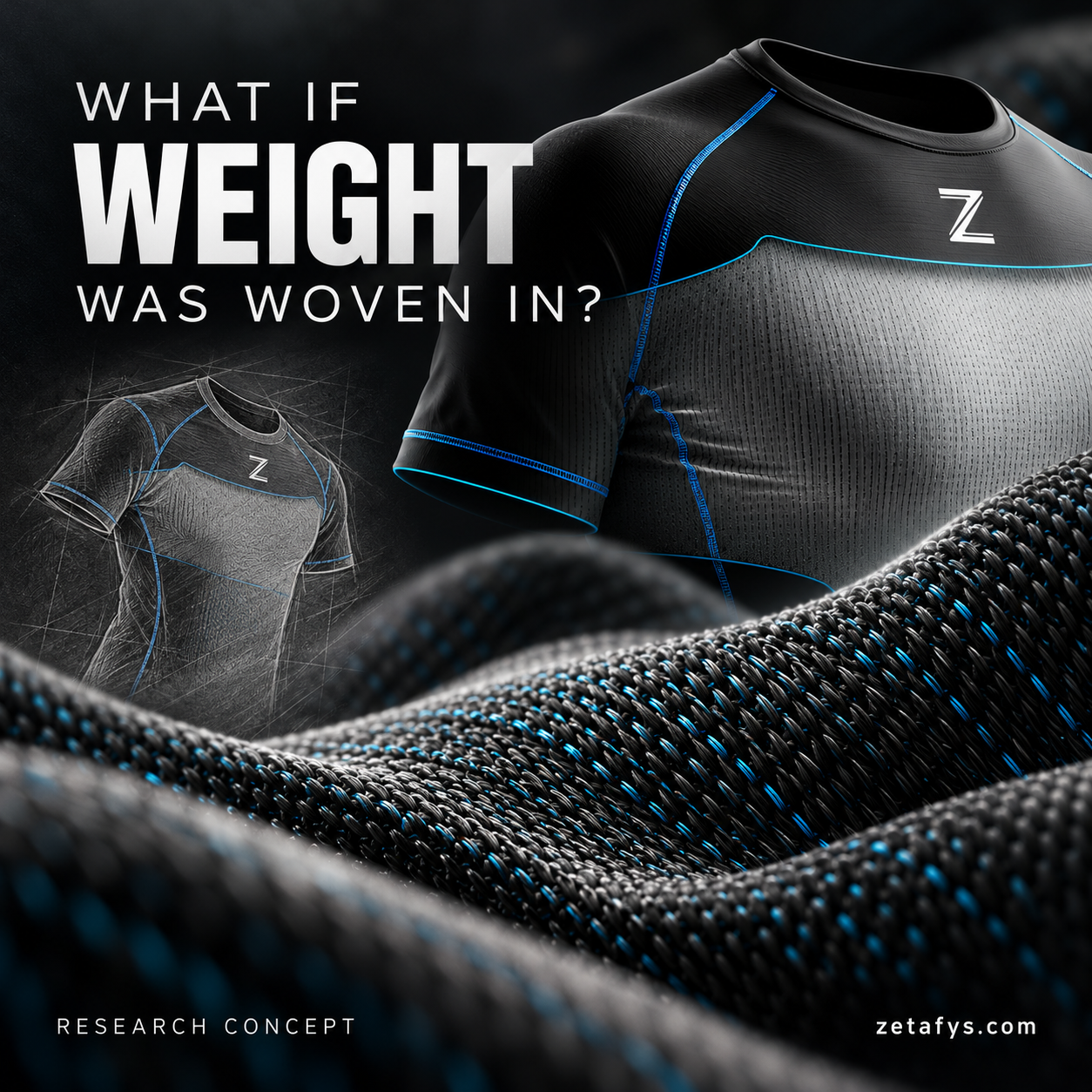
ZETA explores a weighted training t-shirt with weight built into the fabric itself. Can this approach combine useful resistance with comfort and freedom of movement? That is the question guiding our research.
Current stage: concept and research fundraising. Your support helps investigate the materials and develop early prototypes. The outcome is still open.
The concept · How it could work · Research questions · Research plan · Funding · The creator · FAQ · Contact
Project trailer
A first look at ZETA: a weighted training t-shirt concept and the research behind it.
Concept video: the garment shown is a visualization, not a finished product.
Research next.
The ZETA weighted training t-shirt is at the concept and research-fundraising stage. The next step is to investigate feasibility through material studies and early prototypes. Contributions support that work; they are not garment orders.
The idea / weight within the weave
The weighted training t-shirt concept
ZETA asks whether added weight could become part of the textile itself. Instead of designing a garment around separate weights, the project starts with the material.
The proposed direction is to explore cotton–polymer combinations and learn how fiber composition and textile construction might influence density, flexibility, and breathability.
That makes ZETA a material-design question as much as an apparel idea. Research must establish whether the approach can work in practice.
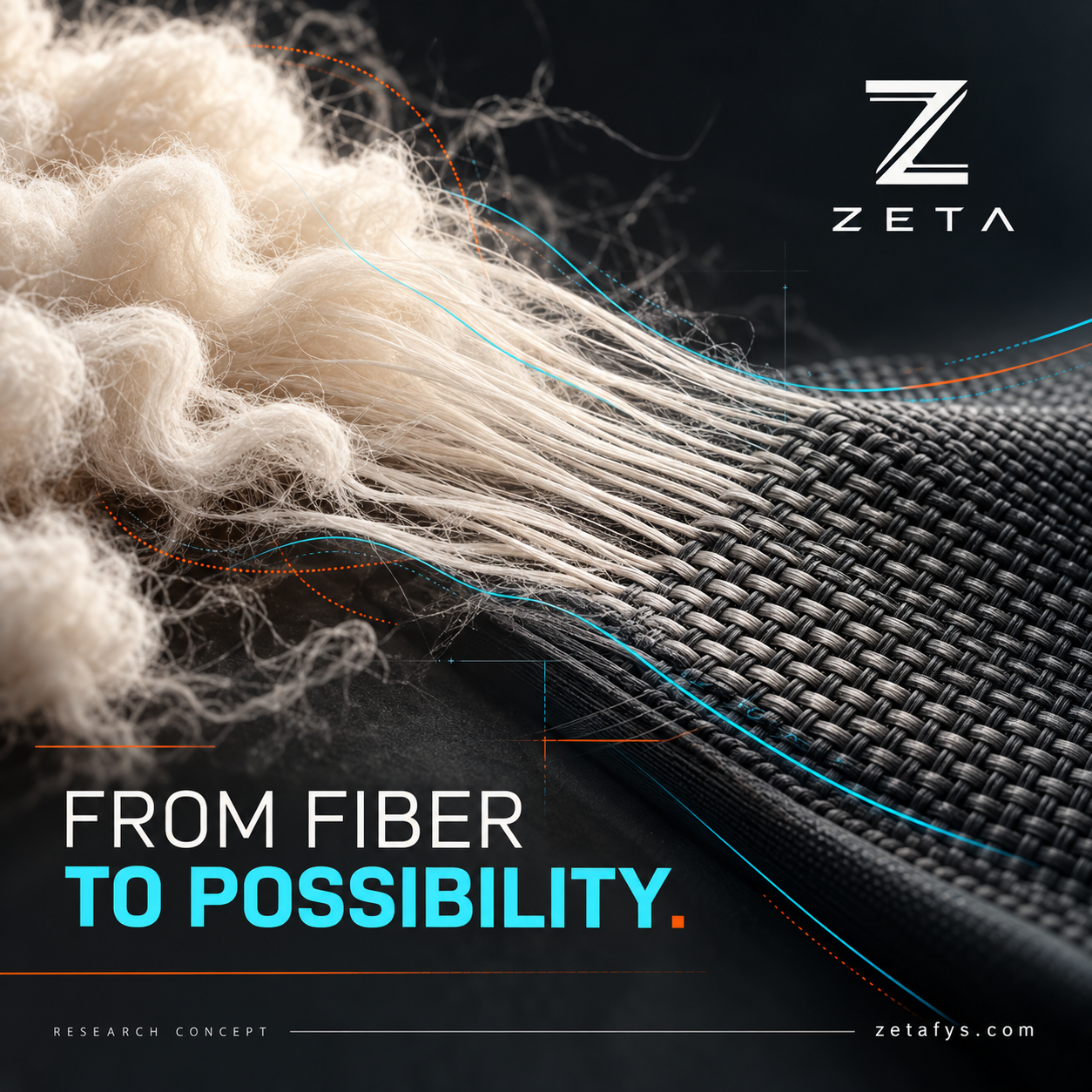
The concept, in three scales
From fiber to fabric to a training t-shirt
The idea becomes easier to understand when you zoom out. ZETA proposes exploring added mass at the material level, then learning what that means for the textile and the garment.
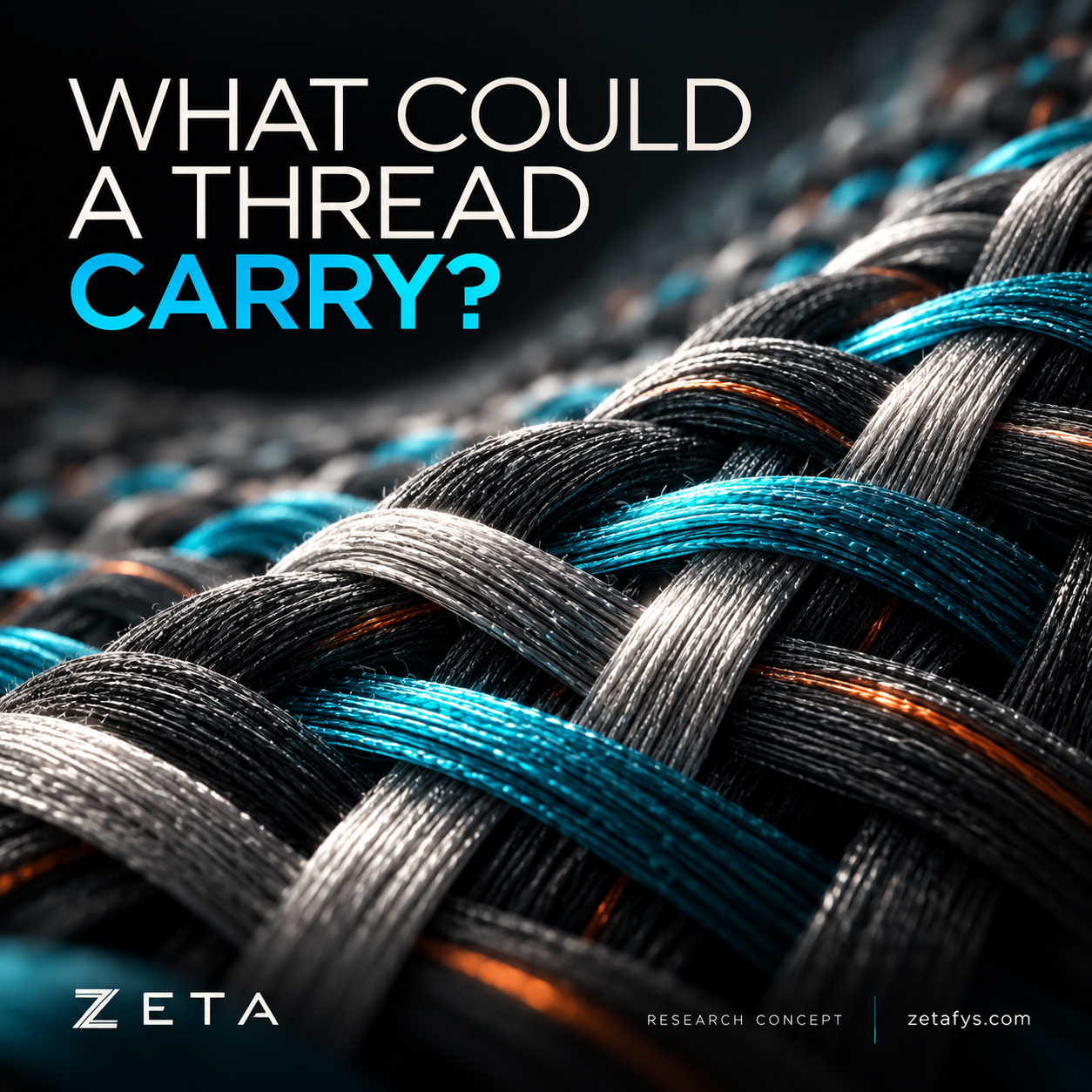
Start with composition
Explore candidate cotton–polymer combinations. The first question is whether the material can provide useful added mass while remaining workable as a textile.
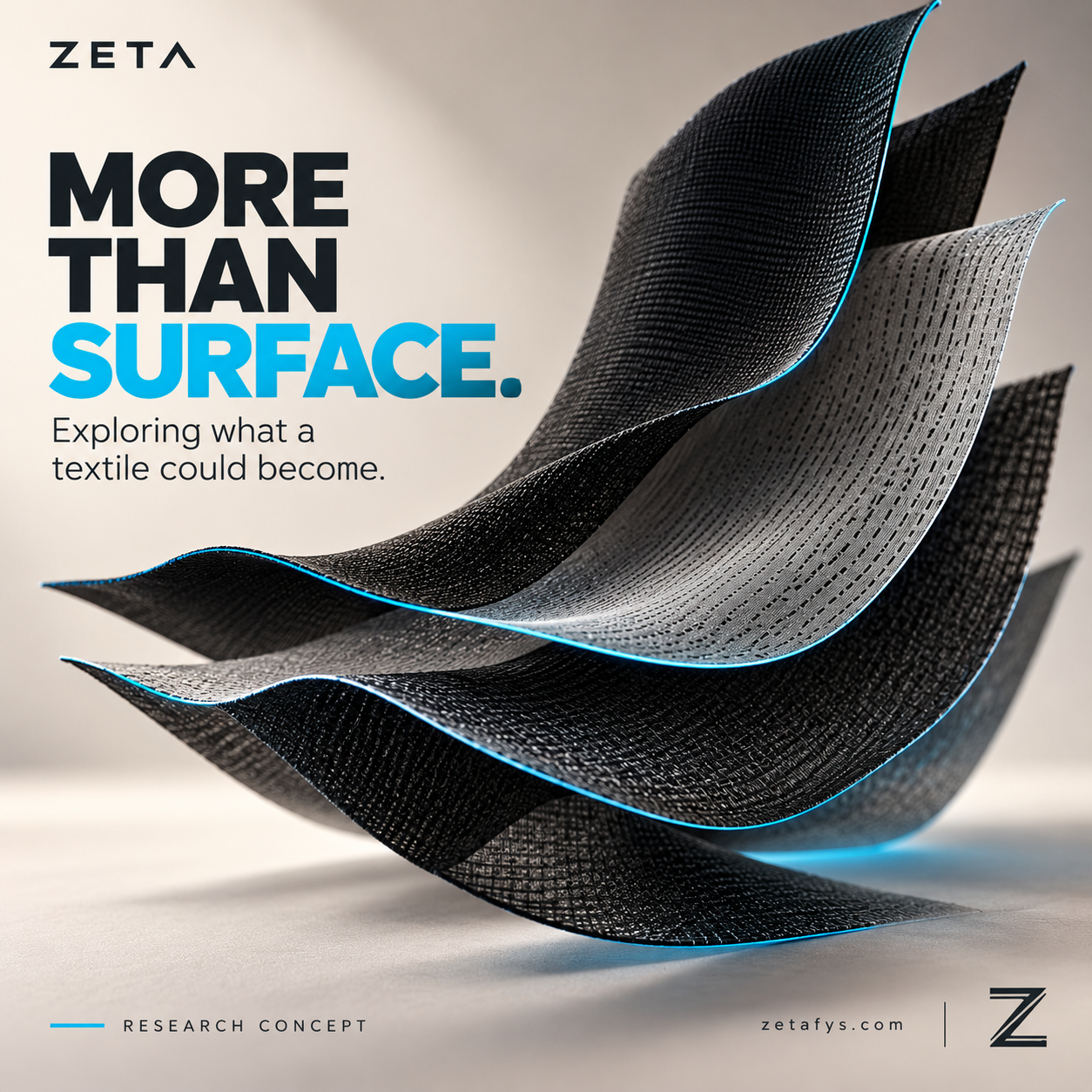
Build and study samples
Investigate how composition and construction interact. Small fabric samples would make it possible to compare mass, flexibility, and air permeability.
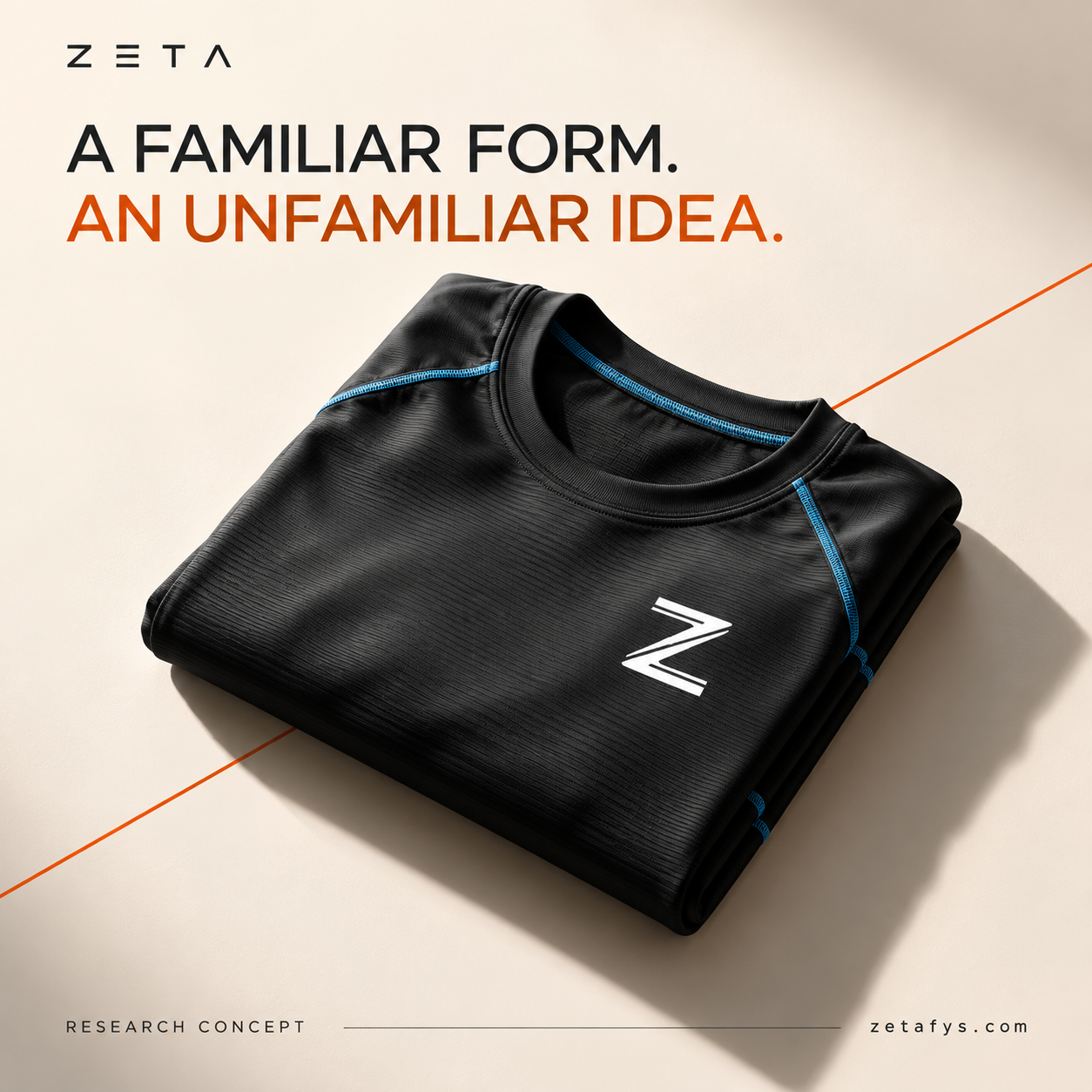
Bring it into clothing
Only then explore a garment: its cut, seams, fit, and weight placement. A promising fabric would still need evaluation as something a person could wear and move in.
A proposed development route, not a manufacturing specification. These illustrations do not show a validated fiber formulation, fabric construction, or finished garment.
What we need to learn
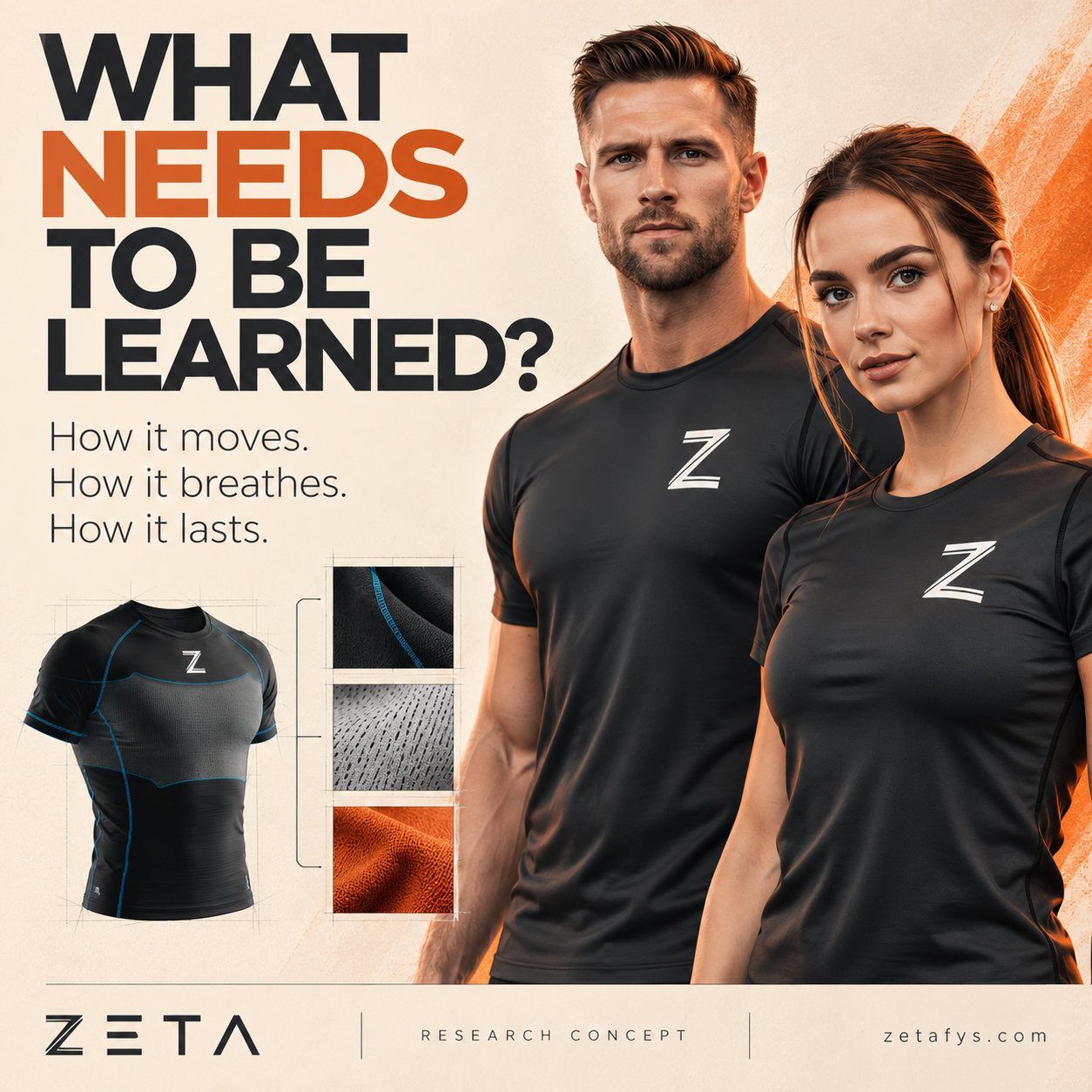
Three questions behind the research
A weighted training t-shirt would need more than added mass. These connected design questions will help determine whether an integrated textile approach is practical.
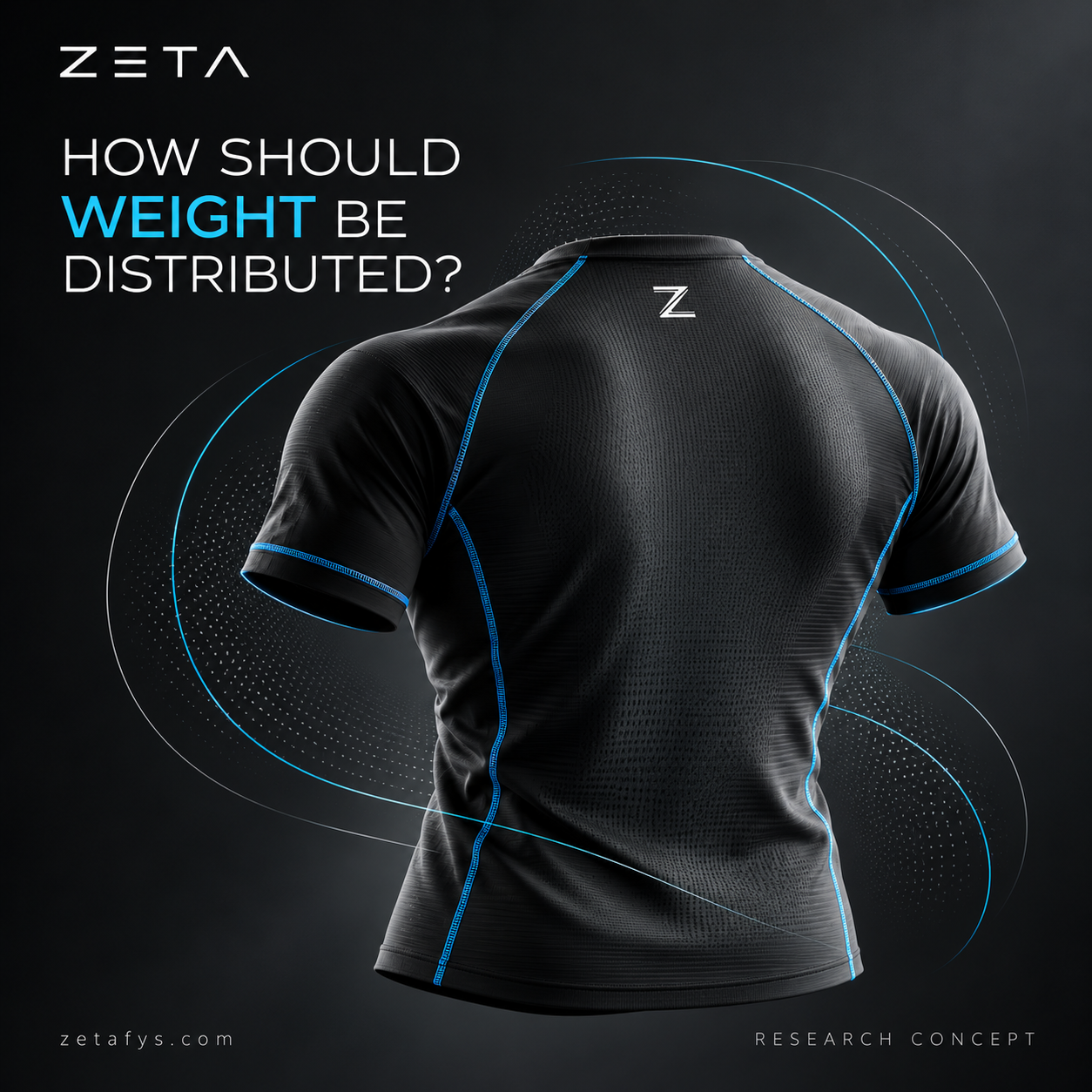
Where should weight sit?
Research needs to examine how mass could be distributed across a textile and garment. Placement, fit, and construction all matter when studying how clothing behaves on a moving body.
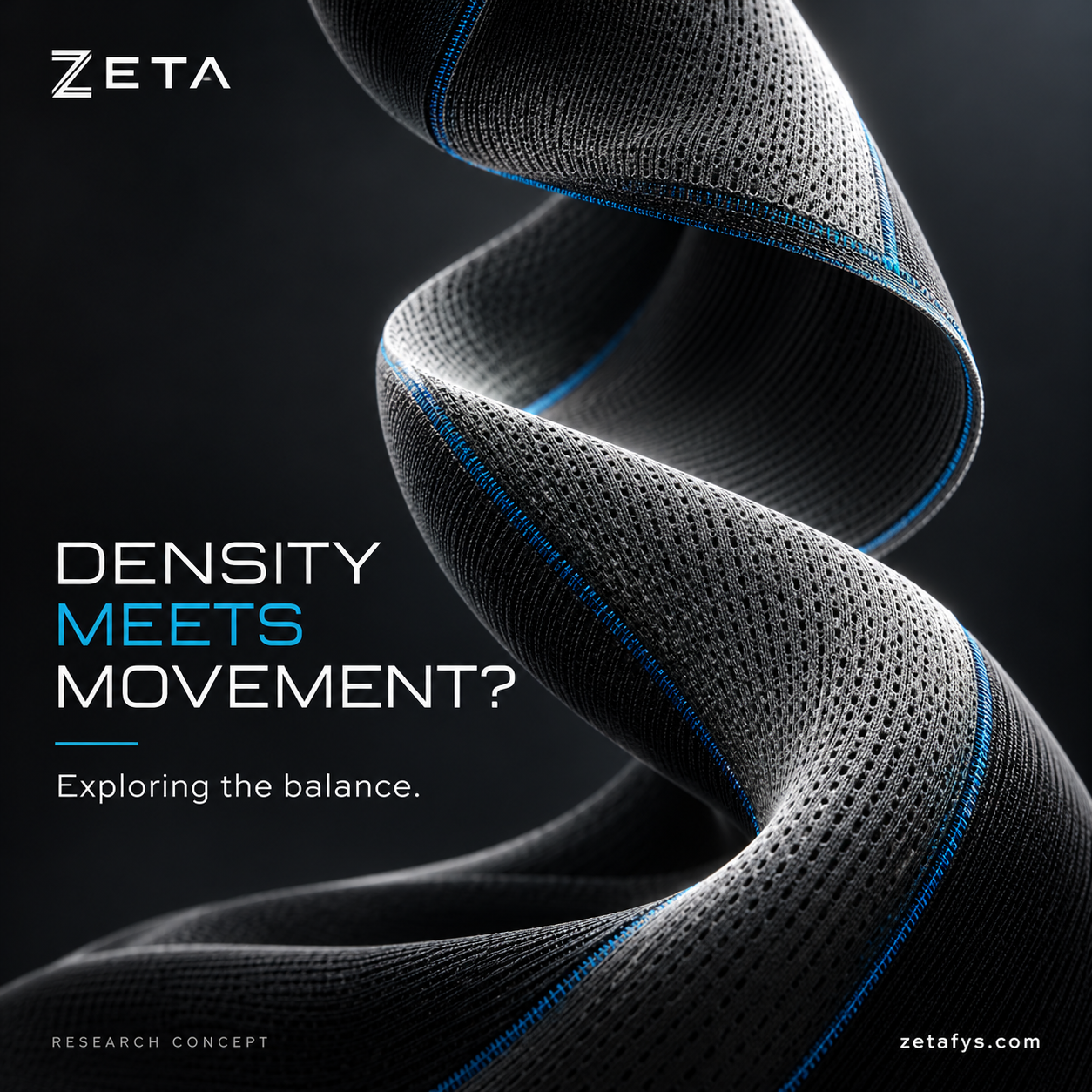
Can density allow movement?
Added density must be considered alongside flexibility and drape. Experimental samples would help investigate how the fabric bends, stretches, and responds to repeated movement.
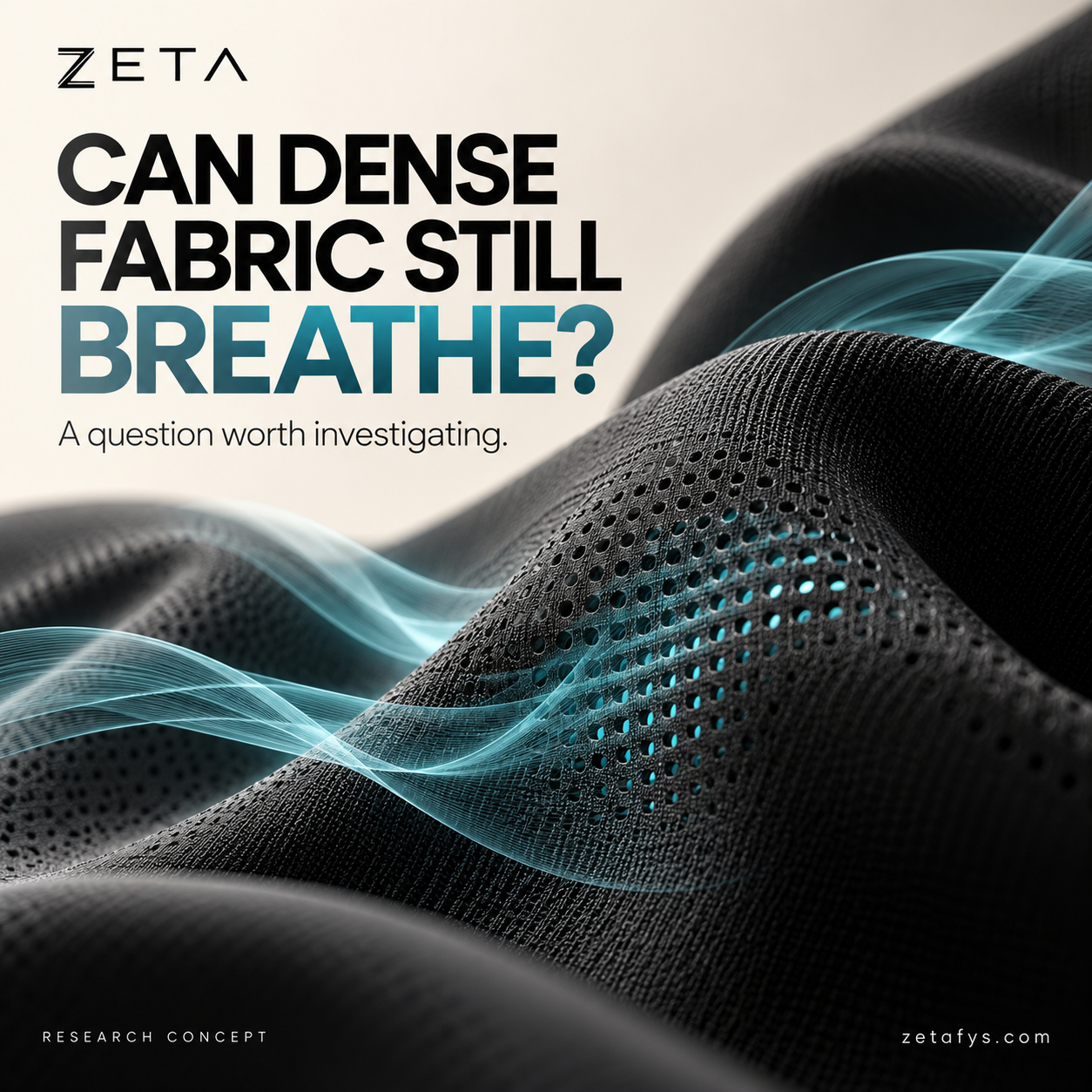
Can the fabric remain breathable?
Breathability and comfort remain open questions. Material studies would need to explore the trade-offs between density, textile structure, and air permeability.
These are research questions, not verified garment properties. All visuals are concept illustrations, not photographs of working prototypes.
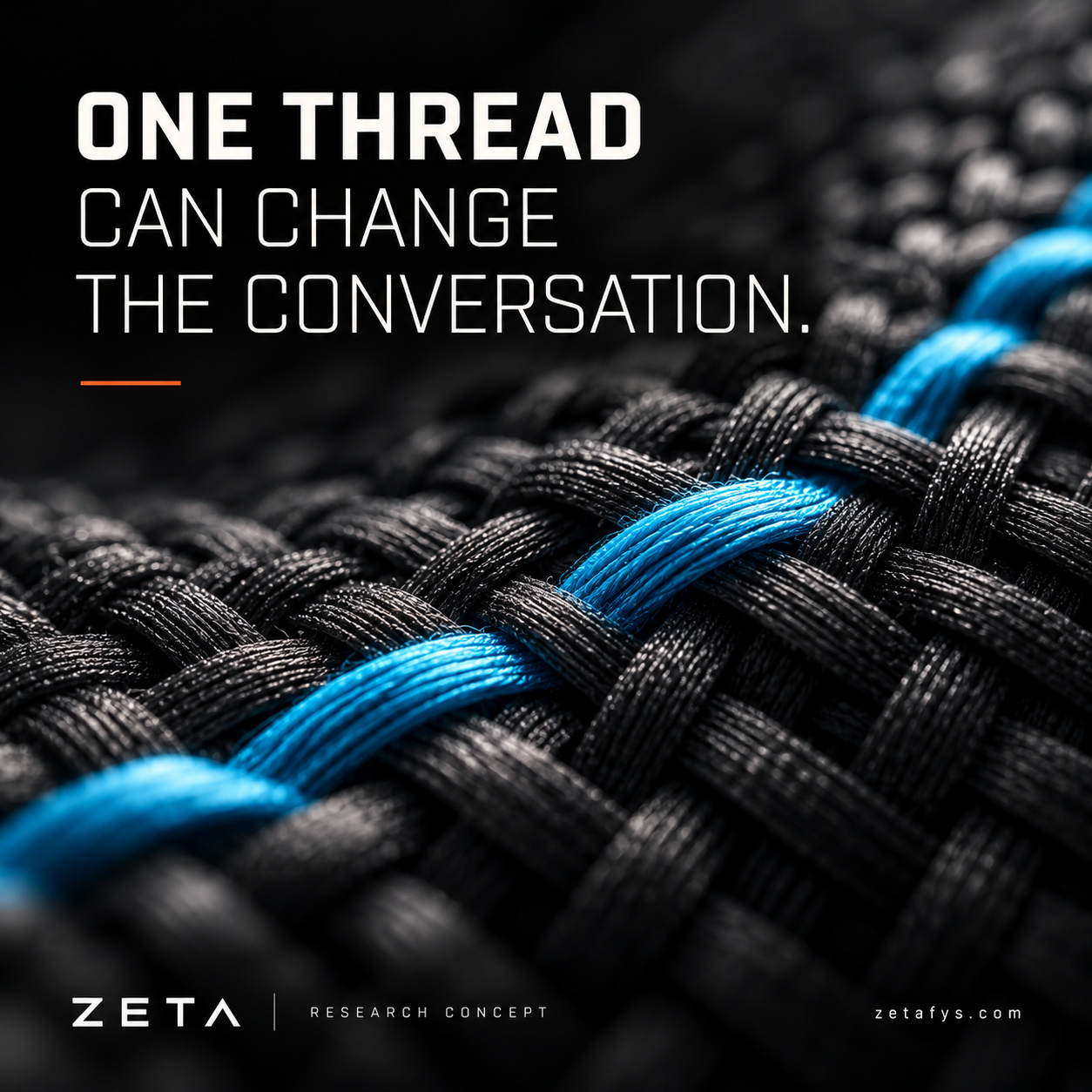
A closer look / material matters
What would the fabric need to do?
Several properties would need to work together. Understanding these terms helps explain why an appealing image is only the beginning of the research.
Density & fabric weight
Density describes mass relative to volume. For a textile sample, mass per unit area is also useful: it helps compare how much weight a piece of fabric carries. A target garment weight would need to be defined and evaluated through research.
Flexibility & drape
Flexibility concerns how a material bends; drape describes how it falls and hangs. Samples would need to be evaluated for both before a garment design could be assessed.
Breathability & comfort
Air permeability is one part of understanding a textile. Comfort also involves fit, heat, moisture, and the wearer. No single image or material property establishes how a garment will feel.
Durability & care
Repeated bending, abrasion, seams, and washing would all raise practical questions. A future sample would need evaluation beyond its first appearance.
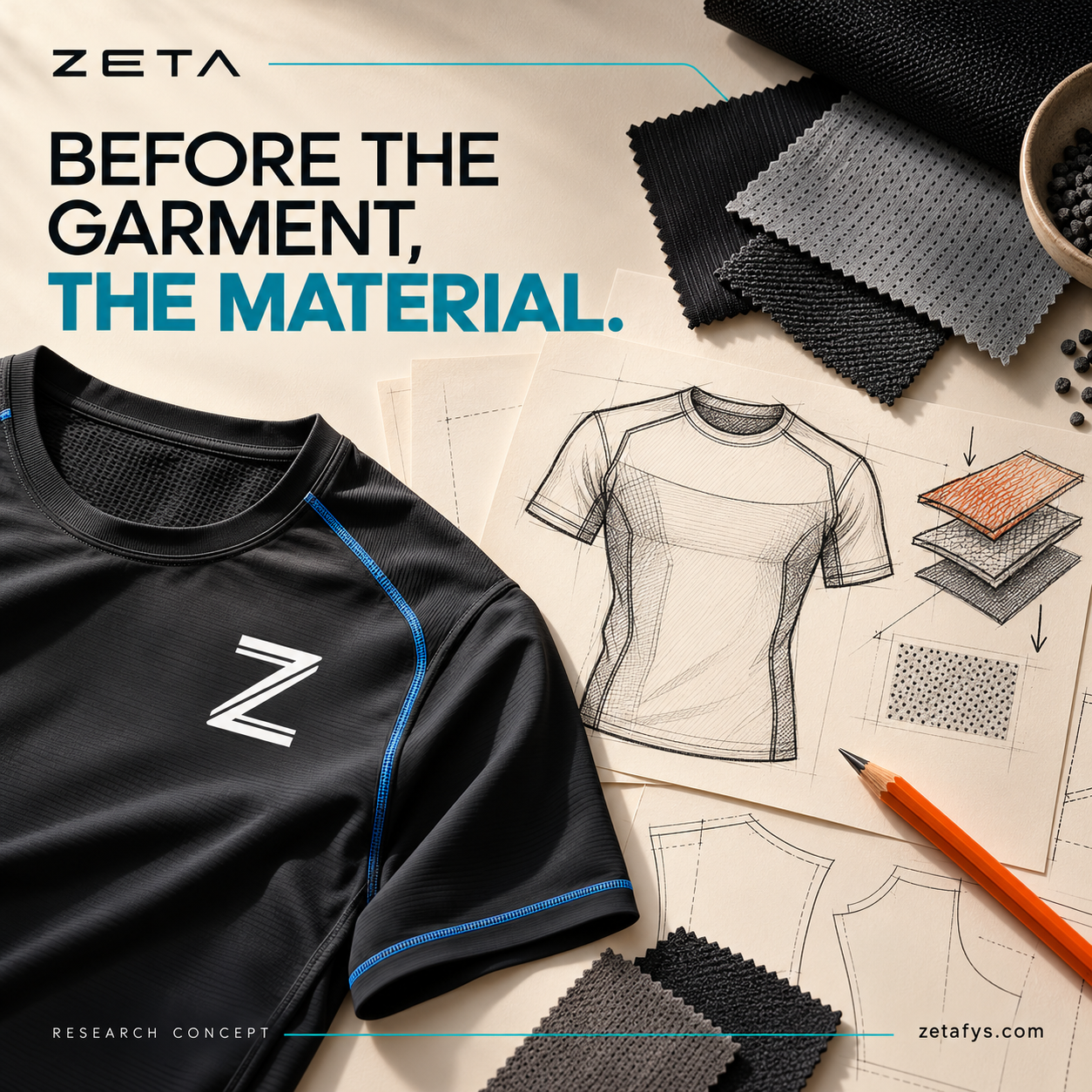
A different starting point
Why research a weighted training t-shirt?
Weighted vests commonly use plates or pockets to carry added load. ZETA explores a different design route: could the textile carry the mass itself?
The question shifts attention to the relationship between material, construction, and the person wearing it. It does not establish that a textile approach would be more comfortable, safer, or more effective.
- Material: investigate composition and density.
- Garment: study fit, weight placement, and construction.
- Use: examine movement, comfort, and durability before making performance claims.
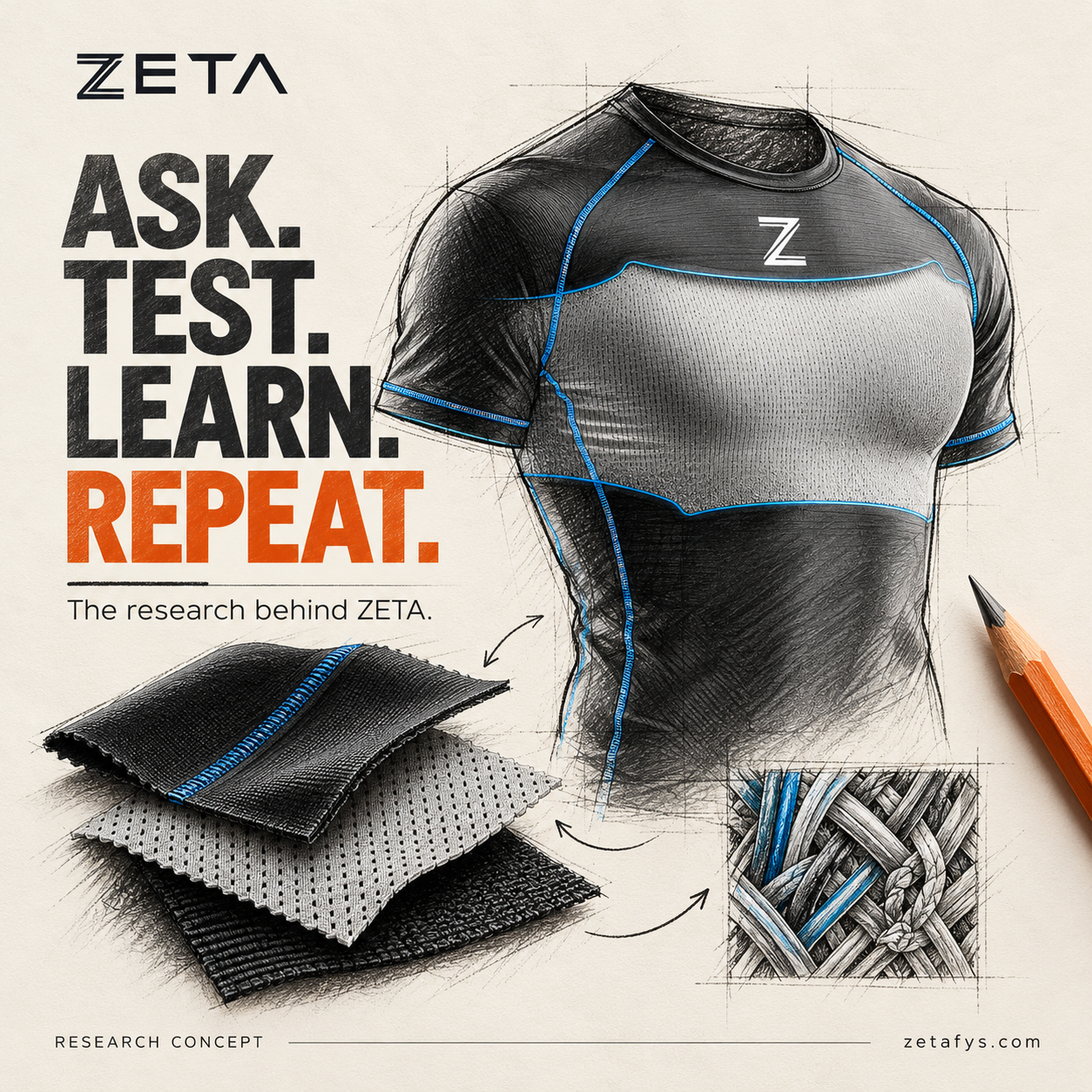
Ask / test / learn / repeat
Weighted training t-shirt research plan
If funded, the planned work follows four connected steps. Findings from each step would guide the next.
Explore the materials
Study cotton–polymer combinations and investigate density, flexibility, and breathability.
Develop early samples
Create experimental textile and garment samples to examine fit and construction.
Investigate their behavior
Use material stress and movement testing to identify limitations and questions for further work.
Review and document
Record findings, seek relevant expertise, and review prior art and possible intellectual-property steps.
Evidence before promises
What would progress look like?
Progress would mean replacing assumptions with observations. These are the kinds of outputs that could help evaluate the idea as funded research develops.
- A shortlist of candidate materialsDocument why each option is worth exploring and what its limitations may be.
- Comparable sample measurementsRecord sample composition, dimensions, mass, and the conditions used for each comparison.
- Prototype observationsDescribe fit, construction, movement, and issues that call for further investigation.
- A clear decision on next stepsUse the findings to refine the direction, seek expertise, or reconsider an approach that does not work.
These are proposed research outputs, not completed milestones or guaranteed deliverables. Results may show that parts of the concept are not feasible.
Support the research behind ZETA
Contributions support material research, testing, early prototypes, intellectual property work, expert support, and documentation. Both campaign pages describe the same research and prototyping initiative.
Before contributing, review the current status, terms, and updates on your preferred platform. Each platform sets its own funding rules.
From support to discovery
How your support
is used.
Your contribution helps test whether the ZETA weighted training t-shirt concept is feasible. The planned work covers five areas, from material studies to clear progress updates.
Material research
First, explore cotton–polymer combinations and study density, flexibility, and breathability.
Early prototypes
Next, develop experimental samples and investigate how the materials behave during movement and stress tests.
Intellectual property
Meanwhile, support prior-art review and provisional patent work where appropriate. However, patent protection depends on the research and review process.
Expertise & development
In addition, bring in relevant consultants and development support to help investigate technical feasibility.
Progress & documentation
Finally, record findings, challenges, and next steps so supporters can follow the research as it develops.
Beyond the initial goal
Additional funding would support more advanced prototypes, longer material tests, broader patent work, and a closer look at manufacturing feasibility. In this way, each step would help us understand what the concept can realistically become.

Meet the founder
Riccardo Zerbinati created ZETA to explore a simple question: could resistance become part of the fabric itself? In particular, the project brings together fitness, design, and material science, with a focus on careful testing and long-term learning.
Meet the creator ↗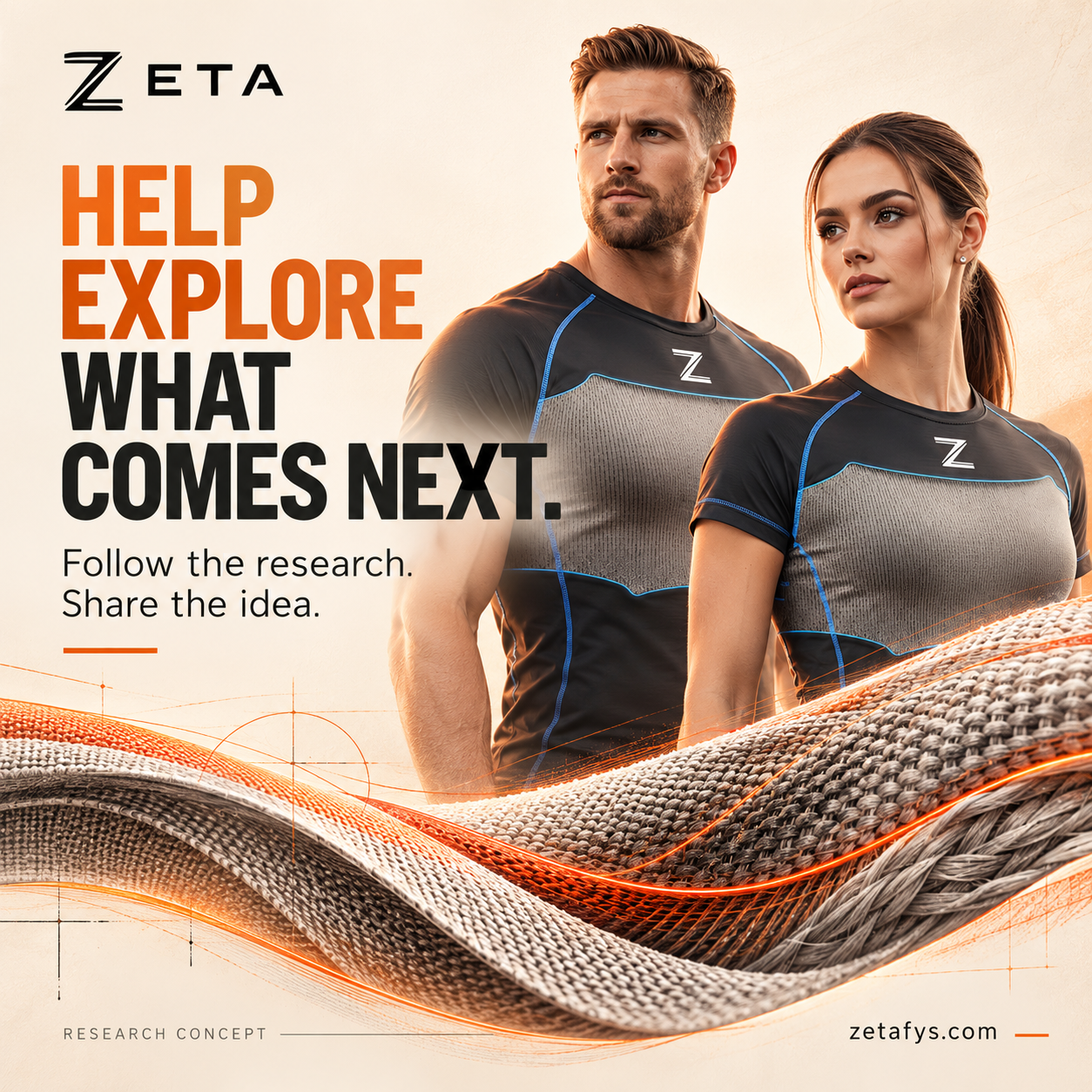
Be part of the research
Your support helps investigate a new idea for training apparel. Contributions fund research and early prototypes; they do not buy a garment or guarantee a commercial product. For this reason, follow the campaigns for project updates, findings, and challenges.
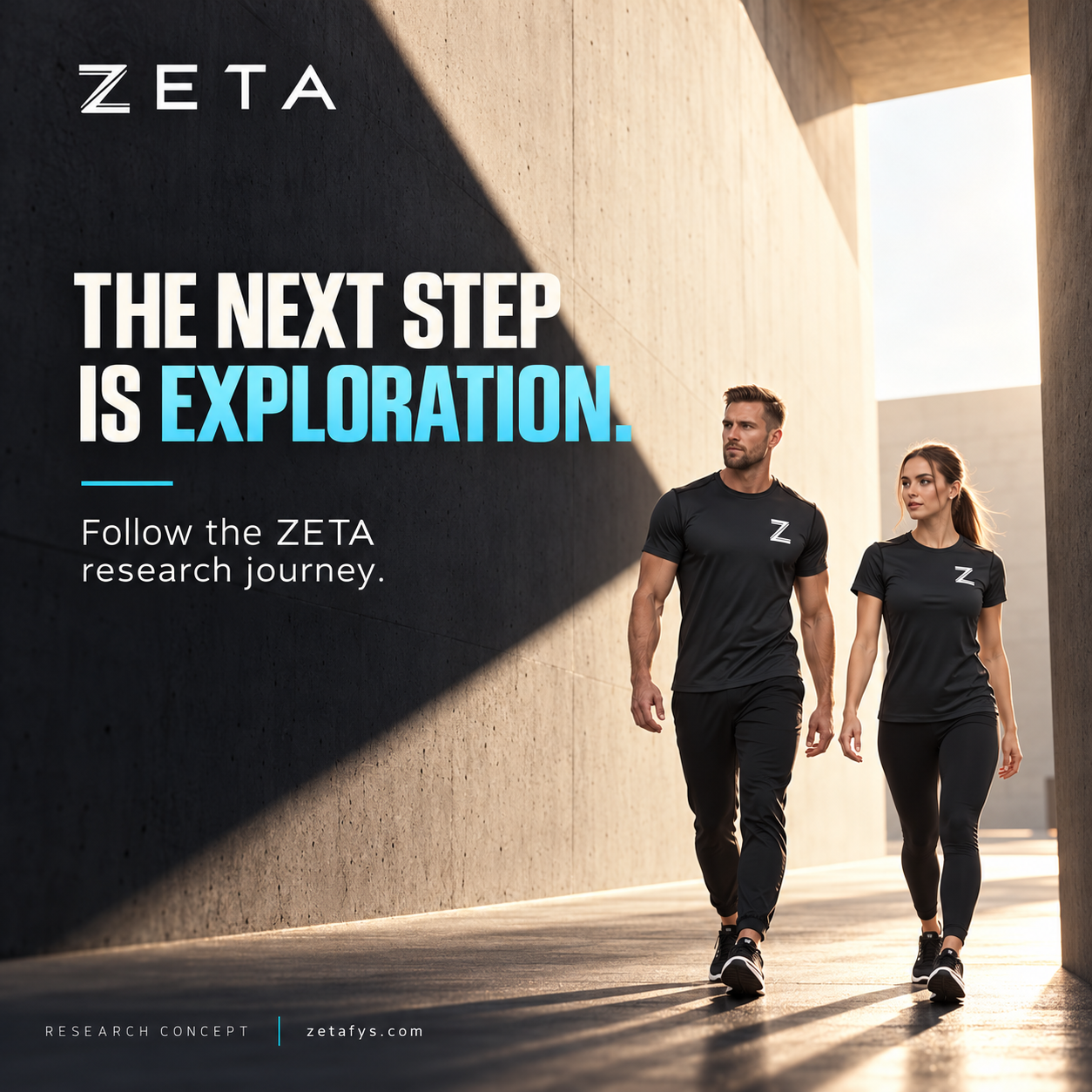
All three images are concept visualizations. They do not depict a finished or commercially available garment.
View the original planned budget breakdown
This graphic presents the planned allocation from the original project materials. It describes a research budget, rather than a production or delivery commitment.

The person behind the project
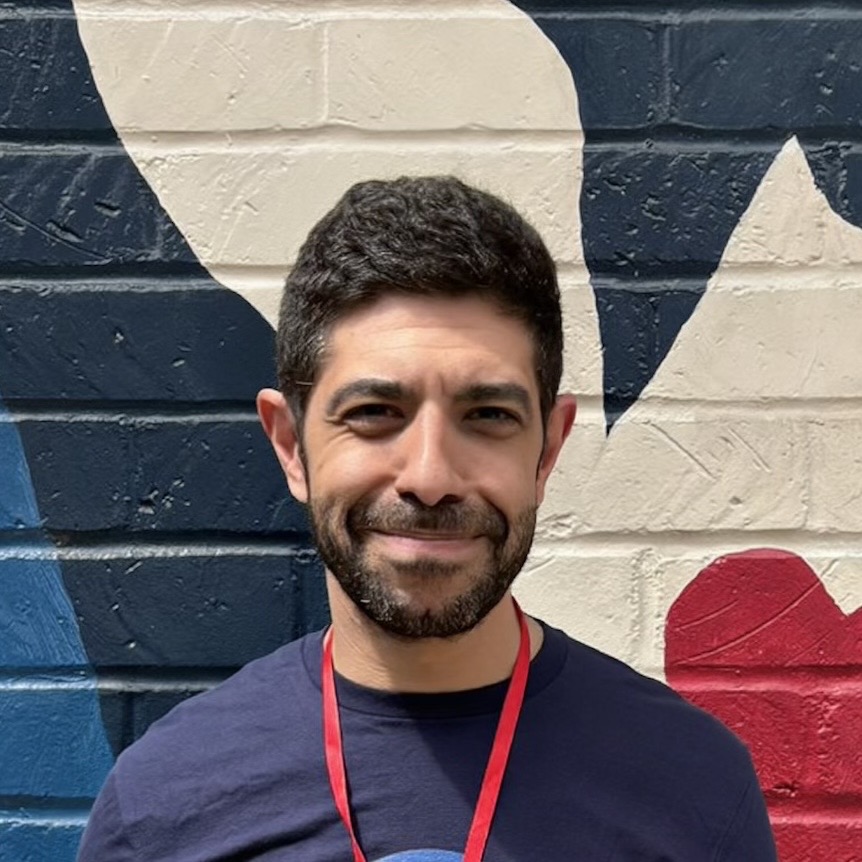
Riccardo Zerbinati
Architect & designer · Los Angeles
Riccardo Zerbinati is an architect and designer based in Los Angeles. His work is driven by a curiosity about how design and experimentation can turn ideas into something useful in everyday life.
With ZETA, he is exploring a question at the intersection of movement, apparel, and material research: could resistance become part of the fabric itself?
His wider ambition is to develop projects with scientific and social value. ZETA is one step in that direction, with an approach built around testing ideas, learning from the results, and sharing progress openly.
A closer look
Frequently asked
questions.
The concept, the research, and what supporting ZETA means.
Can I buy a ZETA weighted training t-shirt?
No. The ZETA weighted training t-shirt remains a concept. Contributions support research; they do not buy a garment or guarantee a commercial product.
How is the concept different from a weighted vest?
A vest usually carries added weight through plates or pockets. In contrast, ZETA explores weight within the textile itself. We still need to study feasibility, comfort, breathability, durability, and safety.
Are the images photographs of a working product?
No. We use concept images to explain the research direction. They do not show a working prototype, a manufactured garment, or a product for sale.
What would the research investigate?
For example, planned work includes cotton–polymer material combinations, density and flexibility studies, breathability, early prototypes, and material stress and movement testing. However, outcomes and timelines remain uncertain.
Who created Project ZETA?
Riccardo Zerbinati created Project ZETA. As an independent founder, he is exploring how fitness, design, and material science could meet in a new textile concept.
Industry context and original illustrative scenarios
Research before commercialization
ZETA explores whether a weighted training t-shirt could bridge the space between apparel and resistance equipment. First, the research must establish whether the textile approach is practical. Only then could the project assess manufacturing methods, costs, and possible applications.
How to read the original market illustrations
For context, the charts below come from the original concept presentation. They show market illustrations and hypothetical adoption scenarios. They are not sales forecasts, verified outcomes, or promises of future revenue. In particular, an assumed market share does not establish likely demand.
This project supports research and validation. Contributions are not an investment offer and do not guarantee a commercial product.


Build understanding together
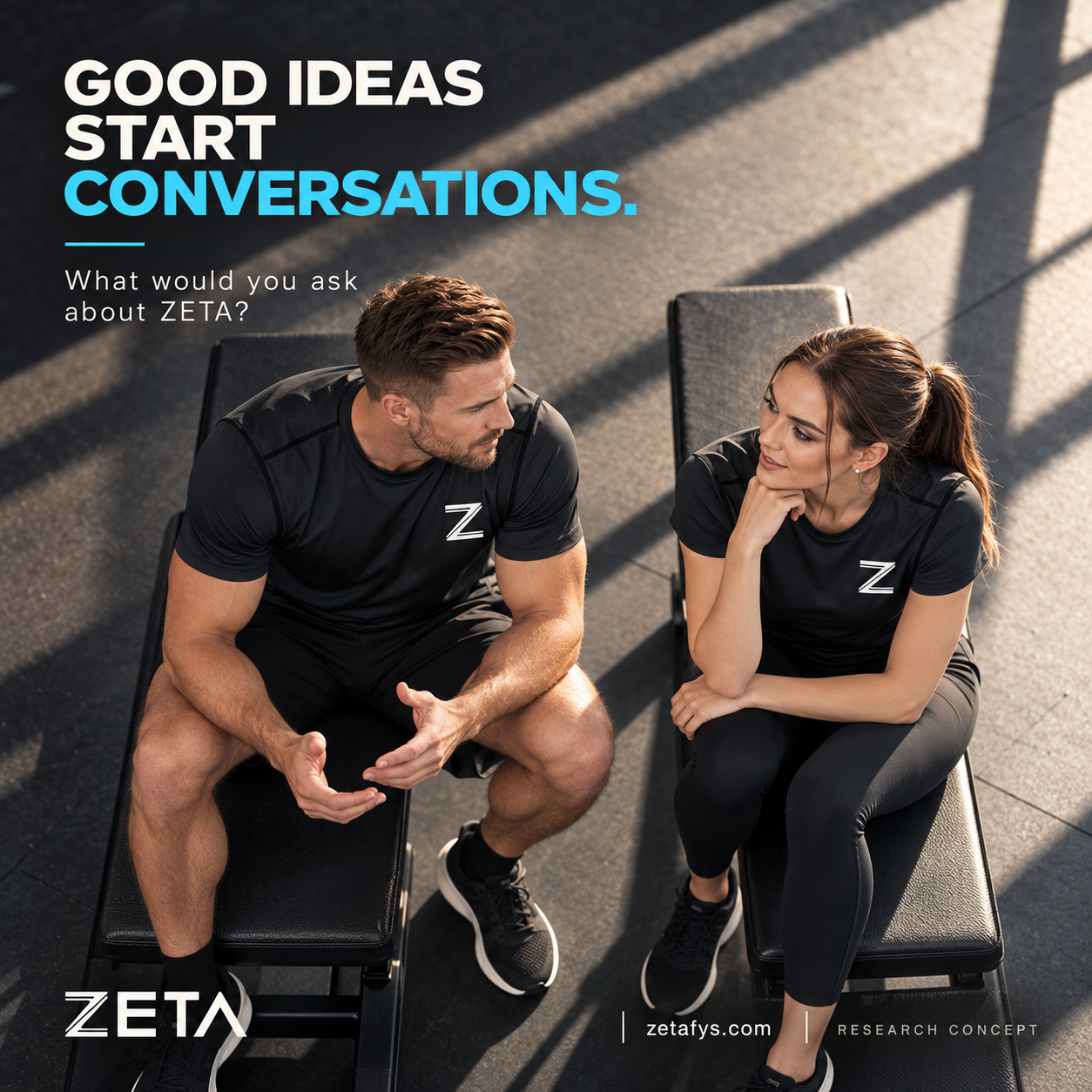
Have expertise to bring to the conversation?
ZETA sits between material exploration, garment design, and movement. Relevant experience could help turn broad questions into better experiments.
- Textiles & material science
- Garment development & prototyping
- Testing & movement research
If your work connects with these questions, introduce yourself and share the area you could help investigate.
Discuss a possible collaborationContact Project ZETA
Have a question about the weighted training t-shirt research or a possible collaboration? Send a message below.